




%20Giardino%20di%20BAPS.jpg)
BES and The British American Pre-School (BAPS) - Early Years
BAPS classes welcome children across four age groups: Toddlers (ages 2 to 3), Nursery (ages 3 to 4), Transition (ages 4 to 5), Reception (ages 5 to 6).
Each age group follows a specific curriculum tailored to the children's stage of development. The first three classes follow the Early Years Foundation Stage framework (EYFS), while Reception follows Key Stage 1 of the British Curriculum. The early years are a time full of emotion: children embark on new adventures and set off on their learning journey.
Our Teachers
Our personalised, multisensory programme offers a wide range of experiences designed to encourage learning and development. With a strong emphasis on play and stimulating activities, we provide play-based experiences that foster children's desire to explore themselves and the world around them. For children, the best way to learn is through doing. Hands-on experience and active participation allow children to develop their full potential in terms of independence, social skills and cognitive abilities.
The Environment
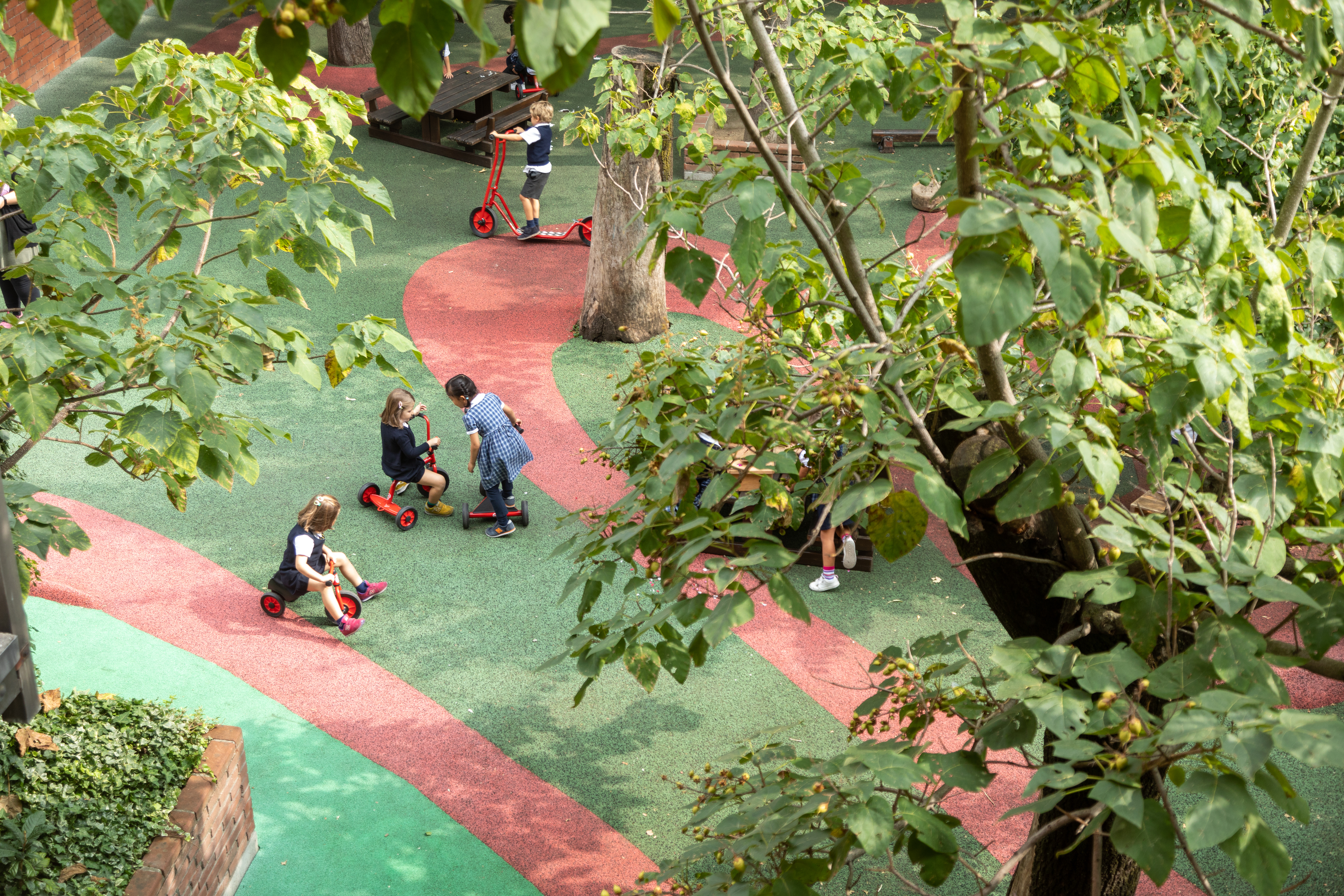
In our spacious classrooms, children have access to a wide variety of resources that provide stimulating learning opportunities. The BAPS garden is very generous in size. Outdoor activities support learning in a setting where children can use a rich variety of materials and resources in the way that suits them best, following their individual desires and interests, and nurturing their natural inclination to play.
What is the Outdoor Classroom?
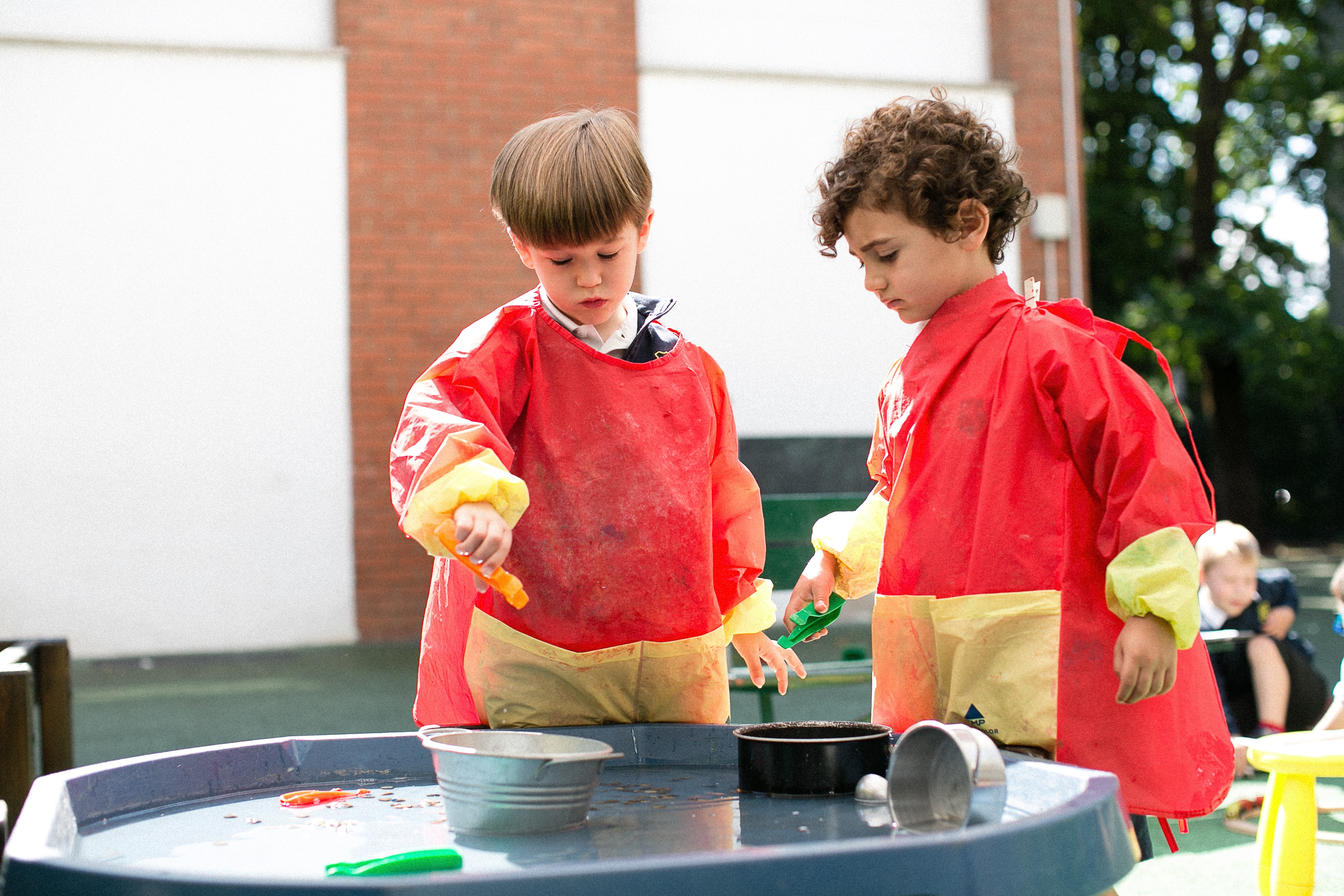
The goal of the Outdoor Classroom is simple: to expand the quantity, quality, and benefits of outdoor experiences for children. The outdoors is an important learning environment. Outside, children have learning experiences that differ from those that take place in the classroom. For this reason, it is essential that outdoor spaces are equipped with the same rich materials and resources that children have access to inside the school.
The importance of independent play
A fundamental principle of the Outdoor Classroom is children's right to choose the activities they want to engage in. They should be free to explore, imagine, experiment, and learn on their own or together with their friends. It is a well-established fact that we all learn more deeply what we have experienced first-hand. Physical activity is important for children. It is essential for their development and health. Outdoor environments give children the opportunity to roam freely, engage in active play with their peers, and discover the world around them. Activities help them refine their motor skills and develop an understanding of the reality in which they live.
Developmentally appropriate activities
When we speak of 'developmentally appropriate activities' in the Outdoor Classroom, we mean activities that children are able to carry out independently, without being pushed beyond their abilities. These activities are essential for authentic learning and for children's overall well-being.
Psychomotor development
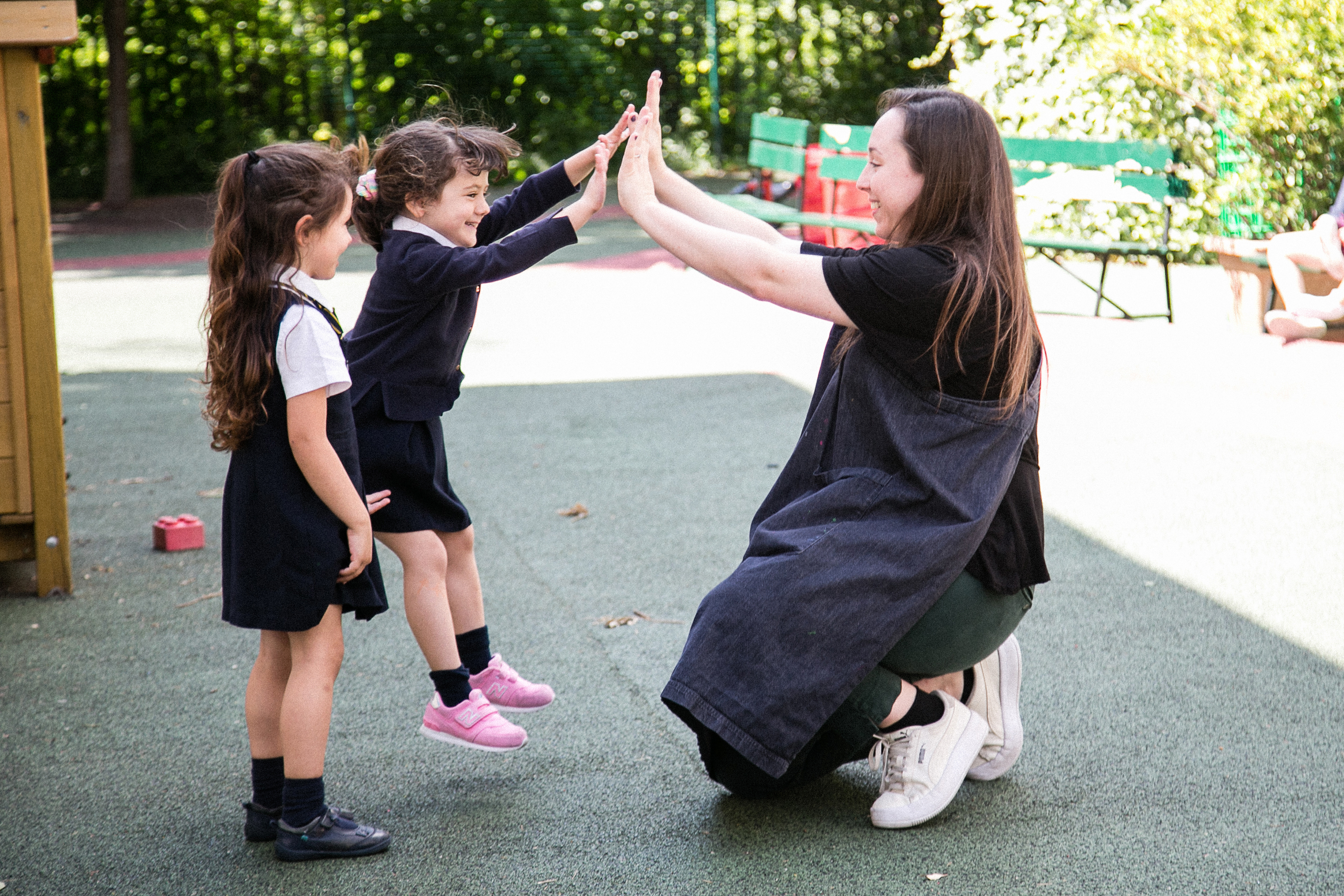
The psychomotricity practised at BAPS is educational and relational in nature: it strengthens expressiveness (through play), communication with others (a sense of boundaries and listening) and creativity (proposing one's own games and recognising each other's ideas). Children's body language reveals far more than they are able to put into words: young children do not express themselves the way we do — they communicate primarily through movement, revealing to the therapist feelings they cannot yet identify, such as fear or anger.
Jolly Music
The Jolly Music programme offers a range of multisensory activities: children move to a beat, sing and dance. It is a method that helps develop foundational skills such as rhythm, timing, pitch, ear training and musical memory. Children use their bodies, an instrument or an object (maracas, tambourines, triangles) to reproduce rhythms and sounds, thereby building confidence and greater self-assurance.
Bruno Munari
The Bruno Munari® Laboratories are spaces for experimentation and discovery, where children are encouraged to explore and find things out entirely on their own. Here, learning happens by doing. The BAPS Atelier is a place of creativity and knowledge — a path of discovery and self-directed learning through play: in short, a dedicated space for "understanding through making". This is why the artist and architect Munari called his Laboratories Giocare con l'arte (Playing with Art): ideas spring first and foremost from the experiences and creativity of each individual child.